

7 Powerful Symbols of Balance and Harmony You Need to Know
In a world full of chaos, constant movement, and uncertainty, the search for balance and harmony becomes a timeless pursuit. Across cultures and centuries, humanity has turned to symbols—visual representations of truth, wisdom, and unity—to understand the deeper rhythm of life.
These balance symbols remind us that balance is not the absence of chaos but the peaceful coexistence of opposites. From the Yin and Yang to the sacred Om, each carries a profound message about harmony within ourselves and with the universe.
This passage will be explored at:
- Yin and Yang: The Eternal Dance of Duality
- The Lotus Flower: Rising Through Imperfection
- The Mandala: A Sacred Circle of Wholeness
- The Infinity Symbol: The Flow of Eternal Balance
- The Tree of Life: Connection Between Heaven and Earth
- The Circle: The Shape of Unity and Harmony
- The Om Symbol: The Sound of Universal Harmony
- Conclusion
Yin and Yang: The Eternal Dance of Duality
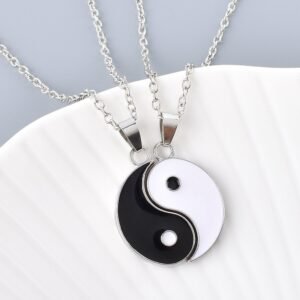
The ancient Chinese symbol of Yin and Yang is the ultimate expression of balance. It represents not a static line between opposites, but a dynamic, flowing dance. The black and white teardrops are intertwined, each containing a seed of the other, showing that light cannot exist without shadow, and activity is defined by rest.
This symbol teaches us that harmony is not about eliminating conflict or contrast, but about embracing the natural flow between them. In our own lives, we can find peace by accepting that joy and sorrow, work and play, are all essential parts of a complete and balanced existence. The goal is not to choose one over the other, but to honor the dance between them.
The Lotus Flower: Rising Through Imperfection
The Lotus Flower grows in muddy water, yet it emerges pure, radiant, and untouched by the dirt that surrounds it. This powerful image has made the lotus a symbol of spiritual awakening, resilience, and inner peace.
In Buddhism and Hinduism, it represents enlightenment—the ability to remain balanced and calm amid life’s challenges. Like the lotus, we too can find beauty and harmony by rising above difficulties, transforming pain into wisdom and growth.

The Mandala: A Sacred Circle of Wholeness
The Mandala, meaning “circle” in Sanskrit, is a sacred geometric design symbolizing the universe, the soul, and the interconnectedness of all things. Found in Hindu and Buddhist traditions, it is used as a meditative tool to restore spiritual balance.
Each mandala begins from a central point and radiates outward, illustrating how harmony comes from our center—our inner peace. Creating or meditating upon a mandala can help calm the mind, organize thoughts, and realign the spirit.
The Infinity Symbol: The Flow of Eternal Balance
The Infinity Symbol (∞) represents endlessness, the eternal flow of time, and the continuous cycle of life. Its unbroken shape conveys the balance between beginnings and endings, between past and future, and between all aspects of existence.
Spiritually, it reminds us that energy is neither created nor destroyed—it only transforms. To live in harmony is to understand this eternal flow and move with it, not against it.
The Tree of Life: Connection Between Heaven and Earth
Found in many cultures—from Celtic and Norse mythology to ancient Egypt—the Tree of Life symbolizes the unity of all creation. Its roots reach deep into the earth while its branches extend toward the heavens, bridging the physical and spiritual worlds.
It represents balance in growth—between grounding and expansion, between individuality and universality. The Tree of Life teaches that all beings are connected, and harmony arises when we honor that sacred connection.
The Circle: The Shape of Unity and Harmony
Simple yet profound, the Circle is a universal symbol of completeness, eternity, and equality. It has no beginning or end, symbolizing the cyclical nature of life and the interdependence of all things. Whether seen in the sun, the moon, or sacred art, the circle reminds us that everything returns to its source. In balance, we find continuity; in wholeness, we find peace.
The Om Symbol: The Sound of Universal Harmony
The Om (ॐ) is more than a sound—it is the vibration of creation itself. In Hinduism, Buddhism, and yoga traditions, Om represents the union of mind, body, and spirit.
Chanting Om aligns us with the rhythm of the universe, dissolving boundaries between self and cosmos. It embodies ultimate harmony—the point where all energies converge into one. Through Om, we are reminded that true balance is not external, but found within.
Conclusion: Living in Balance with the Universe
These timeless symbols—from Yin and Yang to Om—carry a message that transcends language and culture: balance is the essence of life.
To live in harmony means embracing change, honoring opposites, and finding peace within ourselves. By reflecting on these symbols, meditating upon them, or simply keeping them in our daily awareness, we reconnect with the natural rhythm of the universe—and rediscover the serenity that was within us all along.